Why Bees?
When Jackson was diagnosed with autism, we started looking everywhere. Different therapies, different treatments — we tried a lot of things, and a lot of them didn’t work. But we kept going.
At some point we came across research on honey and its therapeutic properties, particularly for allergies. It wasn’t a cure, and we knew that. But it was something, so we tried it. A teaspoon a day.
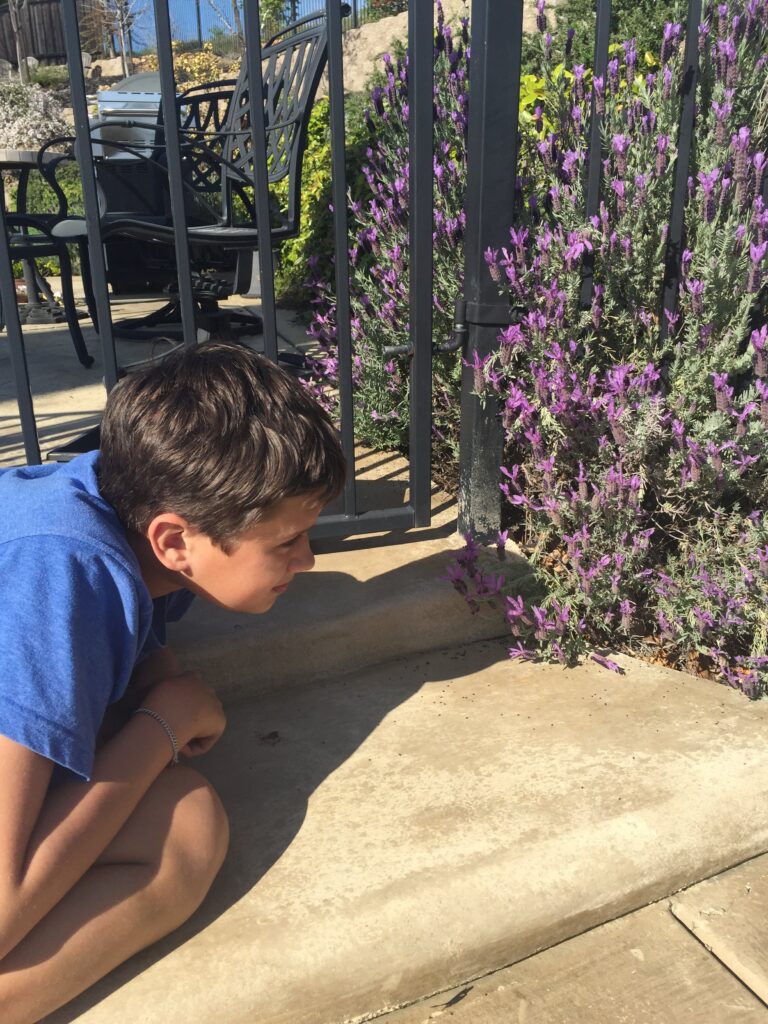
Around that same time, Jackson started noticing the bees in our rosemary plants. He would stand there and watch them for long stretches, completely calm. He started saying “bees are hiding” — and somehow that stuck. That phrase became the name.
“He would watch them fly in and out with wonder and would always say, ‘Bees are hiding.'”
Jackson Seaton
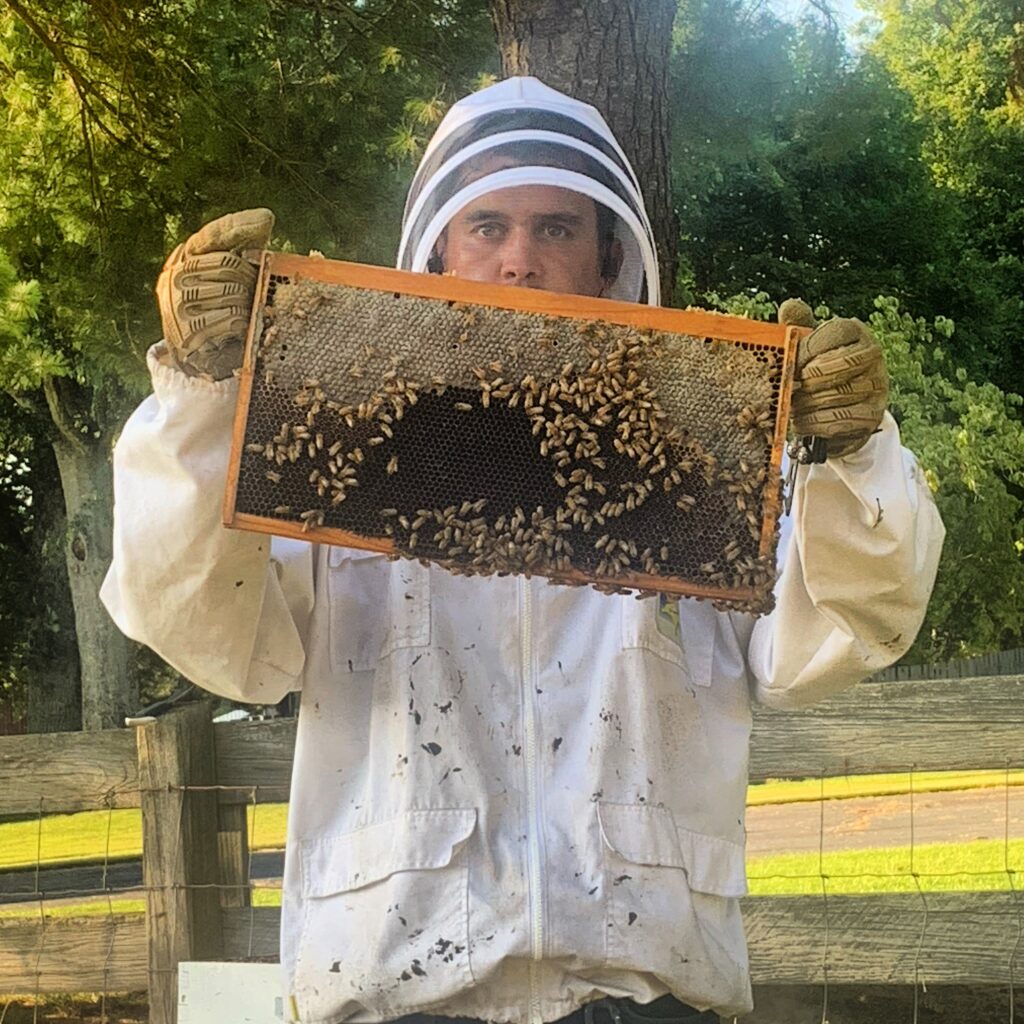
We brought in a local beekeeper and got our first hive — about 10,000 bees. Our oldest son Zachary took to it immediately. He was out there with us every time we checked the hives, helped feed them, learned everything he could. Even our neighbors got into it. What started as a way to help Jackson became something the whole family built together.
Beekeeping didn’t fix everything. Jackson still has autism. He still has epilepsy. But the bees did something we didn’t expect — they gave him a place to be calm, and they gave us a direction we hadn’t seen coming.
A place that has been home to many.
Hidden Bee Animal Rescue, doing business as Hidden Bee Farm, sits in the heart of Middle Tennessee on a historic property established in 1843. The animals here come from all kinds of situations. Some stay because of age or health. Some stay because there’s simply no better place for them. From the day they arrive, the goal is the same: trust, safety, and a good life.
Bees aren’t just our story.
They’re everybody’s story.
One out of every three bites of food you eat exists because a bee pollinated it. Bees support ecosystems, food systems, and biodiversity in ways most people never think about. Losing them has consequences that reach far beyond the hive.
These are some resources worth reading if you want to understand what’s at stake and what you can do.
USDA
Pollinators and Why They Matter
The USDA’s overview of pollinators, their role in agriculture, and ongoing conservation efforts.
Read more →Xerces Society
Protecting Bees and Pollinators
Science-based resources on native bees, habitat, and what individuals can do to help.
Read more →National Geographic
Why Bees Are Essential to Our World
An accessible look at bee biology, population decline, and why this is a global concern.
Read more →EPA
Pollinator Protection
What the EPA is doing about pesticide impacts on bees, and how to protect pollinators at home.
Read more →National Wildlife Federation
Plant for Pollinators
Simple steps to make your yard or garden a better place for bees and other pollinators.
Read more →Bee Informed Partnership
Colony Loss Research
Annual data on honey bee colony loss across the U.S., compiled from thousands of beekeepers.
Read more →Need help with honey bees?
If you have questions about honey bees or need a local removal, reach out to Zachary directly. He handles all things bees and is happy to help.
Want to see where the story goes next?
Meet the animals that call Hidden Bee Farm home, or learn how you can support the rescue.
Meet the Animals Support the Rescue